Don’t miss the latest from Penn IUR. Subscribe to Urban Link.
Providing expert commentary on urban topics and highlighting Penn IUR's research in the context of pressing urban issues.

Planning and Design subtopics include: urban planning, global urbanization, public space and parks, design for health, resilience and the future of cities, and history of cities and disease. Penn IUR resources are indicated with an asterisk.
Public Risk Perception of Covid Transmission and Support for Smart Growth Policies in Seattle Metro Region.
Himanshu Grover analyzes data from an online survey conducted in March 2022 in the Seattle metropolitan area to assess the relationship between COVID concern and public support for smart growth policy outcomes to show that increased COVID concern is negatively related to public support for higher density, smaller home sizes, and greater access to public transit. Posted to SSRN June 2022.
Designing density better for cities and nature
June 17, 2021. Realizing the promise of urban density will not be easy, not least if Covid-19 is a harbinger of further challenges to come. New compacts will be needed between public health and urban design, transport planning and architecture, and businesses, community and government, writes Stephen Cairns, director of the Singapore-ETH Centre's Future Cities Laboratory.
Auckland named world’s most liveable city as COVID reshuffles rankings
June 9, 2021. Sarah Wray. The COVID-19 pandemic has dramatically reshuffled the Economist Intelligence Unit’s ranking of the world’s most liveable cities and could change lifestyle priorities for the long-term. Auckland, New Zealand took the top spot from Austria’s capital Vienna, which has fallen to twelfth place. Eight Asia-Pacific cities dominate the Economist Intelligence Unit’s (EIU) 2021 liveability top ten, including Osaka, Adelaide, Wellington and Tokyo, which round out the top five.
5 lessons for community-focused planning during a pandemic
June 8, 2021. Abel Feleke, Kira Intrator, Charles Palmer, and Malika Giles make the case that the pandemic provides an opportunity to rethink how best to engage communities in urban planning. The authors write that remote tools have become essential but can't replace face-to-face interaction. Accurate data is the foundation of effective participatory planning.
The density paradox: Are densely-populated regions more vulnerable to Covid-19?
May 18, 2021. The “density paradox” refers to the observation that some highly populated cities and countries have recorded a smaller number of Covid-19 cases than regions that are sparsely populated. In this paper, Imad A. Moosa and Ibrahim N. Khatatbeh present empirical evidence on the role played by population density in spreading the coronavirus. The results show that population density has a significantly positive effect on the number of cases but not the number of deaths, as the latter is better explained by measures of preparedness. Plausible explanations are presented for the results to conclude that the “density paradox” is not really a paradox.
Are high-density districts more vulnerable to the COVID-19 pandemic?
April 3, 2021. A study of Tehran, Iran, by Khavarian-Garmsir et al finds that while density alone was not a risk factor for COVID-19, areas with higher car ownership saw fewer infections.
Pandemic Urbanism: Praxis in the Time of Covid-19
An open-access reading list that address the pandemic as it relates to urbanism, urban planning, architecture, and the built environment, put together by PhD and Masters students in the Urban Planning program at the Graduate School of Architecture, Planning and Preservation at Columbia University
Does Density Aggravate the COVID-19 Pandemic? Early Findings and Lessons for Planners
June 18, 2020 article in Journal of the American Planning Association (JAPA) by Shima Hamidi, Sadegh Sabouri, and Reid Ewing that finds that after controlling for metropolitan size, sociodemographic characteristics, health care facilities and other confounding factors, county density is not linked to higher coronavirus infection rates and is significantly linked to lower COVID-19 death rates
Zoning in a Post-Covid World: Parts I and II
Recommendations by planning firm Code Studio for how cities can utilize zoning to improve their communities post-COVID, posted May 27 and June 23, 2020
Doubts about Density: COVID-19 across Cities and Towns
SSRN paper by William C. Wheaton and Anne Kinsella Thompson posted May 19, 2020. Using Massachusetts data released on 4/15/20 and 5/6/20, the authors find that municipalities with greater density and with a greater share of land use in commercial-industrial categories have a significantly higher per capita incidence of the disease; the quantitative impact of these two “urban” variables is particularly large.
*Greening Cities: A Public Realm Approach
Chapter by Alexander Garvin in Growing Greener Cities: Urban Sustainability in the Twenty-First Century (Penn Press 2008), edited by Eugenie L. Birch and Susan M. Wachter
*Toward Social Urbanism for Shrinking Cities
Chapter in Design After Decline: How America Rebuilds Shrinking Cities (Penn Press 2012) by Brent D. Ryan
Pandemics Are Also an Urban Planning Problem
Citylab article from March 26, 2020 on implications for city design
OP-ED: What role do planning and design play in a pandemic?
Mar 19, 2020 reflection by Ann Forsyth on COVID-19's impact on the future of urban life - Harvard Graduate School of Design
A strong COVID-19 response, and a road to recovery
July 22, 2020 World Bank blog post by Axel Van Trotsenburg outlining the World Bank Group’s approach to tackling the crisis organized around 3 stages: relief, restructuring, and resilient recovery
Planning for Rapid Urbanisation in a Post-COVID19 World
July 8, 2020 virtual event, co-hosted by the Commonwealth Association of Planners and The Prince’s Foundation, that considered the need for greater collaboration and innovative responses to address the challenges of rapid urbanisation and climate change including the urgent need for capacity-building and on planning responses that engage with real-world issues such as informality and vulnerability
Extended urbanisation and the spatialities of infectious disease: Demographic change, infrastructure and governance
March 17, 2020 Urban Studies article by Creighton Connolly, Roger Keil and Harris Ali on how ecological pressure caused by growing global urbanization, especially at the periphery of cities, contributes to an increased risk of infectious disease
Webinars and Podcasts
Policy relevance and measurement of international spillover effects in the SDG and Covid-19 context
July 7, 2020 11am CEDT webinar by Sustainable Development Solutions Network and GIZ highlighting the need to address and measure spillover effects in SDG reporting
Op-Eds and Think Pieces
"Plus Ça Change…? How the COVID-19 Crisis May Lead to a Revaluation of the Local"
Paper posted August 16, 2020 to SSRN arguing that, as with previous global crises such as the financial crisis, it is not obvious that the COVID-19 crisis will lead to a process of de-globalization. By Martijn L. P. Groenleer and Daniel Bertram, Tilburg University.
COVID-19 Pandemic Changes the Recreational Use of Urban Parks in Space and Time: Outcomes from Crowd-Sourcing and Machine Learning.
In this study, the inter-relationships between landscape structure and changes in recreational use imposed by COVID-19 were investigated for the three different parks in Moscow (Russia). Posted to SSRN February 2022.
Urban green space use during a time of stress: A case study during the COVID-19 pandemic in Brisbane, Australia
May 26, 2021. Berdejo-Espinola et al explore whether people responded to COVID-19 by spending more time in nature and investigate the reasons for any changes. The authors surveyed 1,002 people in Brisbane, Australia in 2020, to measure the change in use of green space during the restrictions period and benefits people associated with visiting them.
Well-Designed Outdoor Green Spaces Will Remain Popular In Post-Covid Residential Construction
May 24, 2021. Julia Brenner writes about how the pandemic has brought to light the importance of accessible green spaces for both physical and emotional wellbeing.
The adaptive capacity of public space under COVID‐19: Exploring urban design interventions through a sociotechnical systems approach
May 12, 2021. Stevens et al explore the opportunities for making public spaces safer and more accessible for community use under pandemic conditions. They utilize a sociotechnical systems model of an archetype public space, developed pre‐COVID‐19, to explore the infrastructure and activities that are impacted by the introduction of the virus to the public space system.
Few mayors expect to keep COVID-inspired changes to public spaces, survey finds
March 31, 2021. Mayors expect their residents to spend more time outdoors after being inspired to do so amid the coronavirus pandemic, but few leaders are looking to incorporate pandemic-fueled changes to those spaces into long-term plans, according to a survey report of 130 mayors from 38 states.
Soundscape in Times of Change: Case Study of a City Neighbourhood During the COVID-19 Lockdown
March 24, 2021. The coronavirus disease 2019 (COVID-19) lockdown meant a greatly reduced social and economic activity. Sound is of major importance to people’s perception of the environment, and some remarked that the soundscape was changing for the better. Lenzi et al present a case study of the human perception of environmental sounds in an urban neighborhood in the Basque Country between 15 March and 25 May 2020.
Green spaces mitigate racial disparity of health
February 27, 2021. A study of black-white racial disparity of COVID-19 infection rates in the 135 most urbanized counties in the US by Lu et al finds that a higher ratio of green spaces is associated with a lower racial disparity.
Trash Piles Up in Parks, Just When New Yorkers Need Them the Most
August 27, 2020 New York Times article reporting on the consequences of increased park use and budget cuts
Design for Distancing Ideas Guidebook
Compendium of ten concepts for public space interventions that can be adapted for and installed in cities all over the world, developed in summer 2020 by the City of Baltimore, Office of the Mayor and the Baltimore Development Corporation, in partnership with local nonprofit the Neighborhood Design Center as part of the Design for Distancing: Reopening Baltimore Together program
15 Ways to Reconfigure Streets During the COVID Pandemic
Architizer blog post from August 2020 on temporary street layouts that facilitate safer and more efficient services and activities during the COVID–19 crisis
Mapping How Cities Are Reclaiming Street Space
April 3, 2020 CityLab article examining different approaches cities are taking to create more street space for pedesstrians and bicylclists
Don’t Look Back: Equity and Recovery in Public Space During COVID-19
Project for Public Spaces webinar on May 28, 2020 featuring Maggie Parker, Bobby Boone, Madison Morine, and Nidhi Gulati discussing the relationship and reciprocity between private and public space, how different communities experience comfort, perceived safety and inclusion within the public realm, and priorities and best practices for policy change going forward
Who gets access to public space in a pandemic?
May 7 webinar hosted by the Bass Center for Transformative Placemaking at Brookings examining what role city leaders and public space managers are playing in ensuring equitable access to safe open space during the pandemic, and discuss what is still needed
Park Leaders and COVID-19: Serving the Community in Challenging Times
March 25, 2020 discussion hosted by City Parks Alliance on the challenges of managing staff, facilities, and programming, working with authorities and other agencies and continuing to meet the needs of the community
Change in walking steps and association with built environments during the COVID-19 state of emergency: A longitudinal comparison with the first half of 2019 in Yokohama, Japan
Available online 10 March 2021. This longitudinal study by Hino and Asami analyzed the step counts of 18,817 citizens in Yokohama city in the first half of 2020 compared to the previous year, and investigated the association between the change in step counts and the individuals’ neighborhood environment by sex and age using generalized linear mixed models. Step counts decreased especially in women and non-elderly people during the state of emergency. Older women were more susceptible to the neighborhood environment: high walkability (i.e., high population density, proximity to railway stations) adversely affected their step counts, whereas proximity to large parks came to have a positive effect during the state of emergency.
The power of architecture to address public health and environmental crises
Two studies by Dorit Aviv, assistant professor of architecture and director of the Thermal Architecture Lab in the Stuart Weitzman School of Design, show how architecture can help create interior spaces that are both COVID-safe and energy efficient. April 5, 2021.
Designing Senior Housing for Safe Interaction
Report from MASS Design Group outlining design principles and including a case study on how to design for safe interaction (not social isolation)
Turning the Heat: Resiliency in New York City’s Heat-Vulnerable Neighborhoods
Urban Design Forum report compiling recommendations for addressing the threat of extreme heat through the built environment
Streets for Pandemic Response and Recovery
National Association of City Transportation Officials (NACTO) resource (updated June 2020 to include a “Streets for Protest” implementation sheet, with guidance on facilitating safe demonstrations amid the pandemic)
*Women’s Health and the City: A Comprehensive Approach for the Developing World
Chapter by Julio Frenk and Octavio Gómez-Dantés from Women’s Health and the World’s Cities (Penn Press, 2011), edited by Afaf Meleis, Eugenie Birch, Susan Wachter, on the complex set of health challenges women living in cities in the developing world face challenges and some strategies to address them
*Design of Healthy Cities for Women
Chapter by Eugénie L. Birch from Women’s Health and the World’s Cities (Penn Press, 2011), edited by Afaf Meleis, Eugenie Birch, Susan Wachter, on urban design to promote health for women
Webinars and Podcasts
*COVID-19: The Intersection of Design and Health During and Post a Pandemic
June 24, 2020, virtual discussion, hosted by FitCityPHL with co-sponsor Penn IUR, on the intersection of health and design during and after the COVID-19 pandemic. Featuring David Barnes, Deepa Mankika, and Diana Lind
Cities That Heal: How The Coronavirus Pandemic Could Change Urban Design
April 28, 2020 episode from WBUR’s On Point podcast with an architect (Michael Murphy) and urban planner (Ken Greenberg) about how to change the brick-and-mortar world for better human health
Op-Eds and Think Pieces
Commentary: Past pandemics changed the design of cities. Six ways COVID-19 could do the same
April 22, 2020 article by Sam Lubell in the Los Angeles Times
Opinion: Redesigning The COVID-19 City
April 20, 2020 opinion article by Robert Muggah and Thomas Ermacora
What determines urban resilience against COVID-19?
December 2021 article in Sustainable Cities and Society by Zhen Chu, Mingwang Cheng, and Malin Song finds that the prevention and control of the COVID-19 pandemic are not directly related to city size, but city governance capacity.
COVID Vaccines Are Already Changing Cities
May 23, 2021. Devin Partida writes on Planetizen about how urban environments are transforming and reinventing themselves in the wake of the coronavirus.
Welcome to the 15-Minute City
July 16, 2020 Financial Times article on the repercussions of widespread adoption of working from home
COVID-19 is Shifting the Focus from Smart Cities to Resilient Cities
October 26, 2020 CitiesToday article on how the coronavirus pandemic is pushing cities to incorporate resilience into their recovery plans
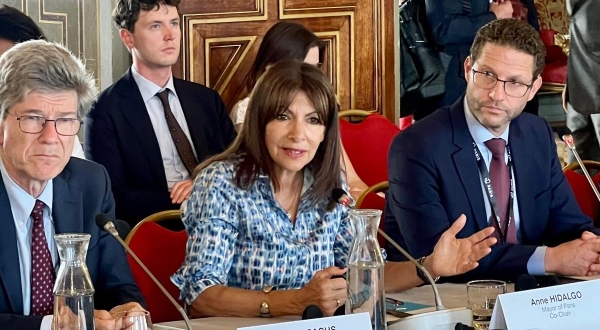
'We Heard Birds.' Paris Mayor Anne Hidalgo on How Lockdown Offered a Glimpse at a Greener City
July 8, 2020 Time article on changes, including miles of new bike lanes, made to Paris during the coronavirus lockdown
Urban Resiliency in the Time of COVID
June 11, 2020 Kleinman Center for Energy Policy blog post by Oscar Serpell on how cities can emerge more resilient from this pandemic, with a discussion of mode shifts, investment in public spaces, and energy savings
Vilnius Shows How the Pandemic Is Already Remaking Cities
June 9, 2020 article in The Atlantic on the changes cities are experiencing due to the pandemic, with a closer look at the Lithuanian capital
*U.S.-Japan Grassroots Exchange Program: Citizen Participation in Community Building Post-Disaster: 2015 , 2016, and 2017 reports
Three-year exchange program that examined how four cities (New Orleans, Louisiana; Galveston, Texas; Miyako, Iwate Prefecture; and Kobe, Hyogo Prefecture) engaged their citizens in the long-term recovery and rebuilding in the aftermath of natural disasters
*Rebuilding Urban Places After Disaster: Lessons from Hurricane Katrina
Volume edited by Eugenie L. Birch and Susan M. Wachter that examines the rebuilding of cities and their environs after a disaster, focusing on: making cities less vulnerable to disaster, reestablishing economic viability, responding to the permanent needs of the displaced, and recreating a sense of place
*The Historical Vitality of Cities
Chapter by Edward Glaeser in Revitalizing American Cities (Penn Press 2012), edited by Susan M. Wachter and Kimberly A. Zeuli
Webinars and Podcasts
Coronavirus Speaker Series: Sharing Knowledge to Respond with Resilience
A weekly session organized by the Global Resilient Cities Network (GRCN) as a knowledge-sharing session for cities in response to the rapidly evolving COVID-19 pandemic
“Covid Calls” episodes of Slow Disaster podcast
Scott Gabriel Knowles (who wrote the Penn IUR City in the 21st Century book Disaster Experts) interviews disaster experts on his weekly podcast
The Future of Cities After COVID-19
Virtual panel discussion hosted by Planetizen focusing on the potential for the COVID-19 pandemic to influence the development, demographic, and environmental trends of the future. Speakers: Allison Arieff, William Fulton, Scott Frazier, and Mariela Alfonzo. Moderator: James Brasuell. Planetizen course created 2020.
Will COVID Kill the City?
May 29, 2020 episode of Create the Village podcast featuring Penn IUR Co-Directors Eugénie Birch and Susan Wachter
Building Better Cities after Covid-19
May 20, 2020 episode of Harvard Business Review’s Exponential View podcast entitled with Sameh Wahba, the World Bank’s Global Director of Urban, Disaster Risk Management, Resilience, and Land
Op-Eds and Think Pieces
Why City Centres Can Survive Covid-19
November 5, 2020 article in The New Statesman by Paul Swinney, director of policy and research at the Centre for Cities, explaining his confidence that high streets and city centres will adapt to the challenge of Covid-19.
Re-imagining cities in the COVID-19 era
July 1, 2020 blog post by Robert Muggah in the OECD’s Development Matters
Coronavirus: we’re in a real-time laboratory of a more sustainable urban future
April 27, 2020 article Paul Chatterton in The Conversation on learning from crisis-led innovations
How Life in Our Cities Will Look After the Coronavirus Pandemic
May 1, 2020 Foreign Policy article with predictions from 11 leading global experts in urban policy, planning, history, and health
Smart lifts, lonely workers, no towers or tourists: architecture after coronavirus
April 13, 2020 Guardian article on possible changes to architecture and city design post-COVID-19
Debating the Future of Cities, and Urban Density, After the Pandemic
Planetizen blog post from March 23, 2020 featuring numerous urban experts
*After the pandemic, how will society remember more than 3 million lives lost to COVID-19?
May 11, 2021. This spring, the Remembering Epidemics course at Penn delved into both the history of disease outbreaks in Philadelphia and the nature of public commemoration and collective memory.
Pandemic Urbanism: Praxis in the Time of Covid-19
An open-access reading list that address the pandemic as it relates to urbanism, urban planning, architecture, and the built environment, put together by PhD and Masters students in the Urban Planning program at the Graduate School of Architecture, Planning and Preservation at Columbia University
How pandemics have changed American cities – often for the better
May 18, 2020 article in The Conversation by Catherine Brinkley on her research on urban planning and infectious disease
*The Shape of the New American City
November 2009 issue of The ANNALS of the American Academy of Political and Social Science Series edited by Penn IUR co-directors Eugénie Birch and Susan Wachter that analyzes demographic trends, housing preferences, crime patterns, economic indicators, and infrastructure investments to examine patterns emerging in the nation′s cities at the end of the first decade of the 21st century
*The Devil's Privilege
The first chapter in The Disaster Experts Mastering Risk in Modern America (Penn Press 2013) begins the history of how disaster expertise has shaped modern American cities
Pandemics have destroyed cities before. Could they do it again?
April 24, 2020 conversation between Richard Florida and Charles Kenney about the changing dynamic between urbanization and infectious disease
Stories of Space in Times of Quarantine
April 8, 2020 article by Félix de Rosen on McHarg Center blog on the legacy of the 18th century plague in Marseille
Providing expert commentary on urban topics and highlighting Penn IUR's research in the context of pressing urban issues.