Erick Guerra on the Costs and Benefits of Roads
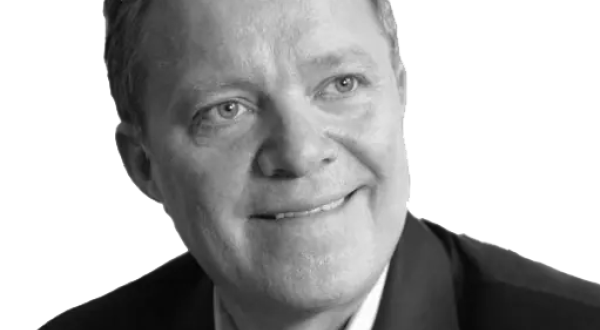
Erick Guerra is Professor and Associate Dean for Research at the Weitzman School and a Penn IUR Faculty Fellow.
Erick Guerra studies the intersection of transportation, land use, and travel behavior, particularly in rapidly urbanizing and motorizing cities. His research explores how urban form and transportation systems influence mobility choices, public health, and environmental outcomes. He has conducted extensive studies on transportation policy and planning spanning across the Global North and Global South and has contributed to worldwide discussions on sustainable urban development through collaborations with international institutions, including the World Bank and the OECD.
Central to his work is the ability to discern the contextual opportunities and nuanced challenges of transportation policy across diverse geographies with varying levels of development. His research addresses cutting-edge topics, including emerging transportation technologies, such as autonomous vehicles, and their implications for urban planning, equity, and safety.
In his new book,Overbuilt: The High Costs and Low Rewards of U.S. Highway Construction (Island Press, 2025), Guerra provides a rigorous, evidence-based analysis of the U.S. highway system, documenting how it became overbuilt and the consequences of continued expansion. He shows that urban highways historically often caused significant social and environmental harm, including the displacement of Black, Brown, and low-income communities, the consumption of valuable urban land, and the perpetuation of car dependency.
The book highlights several examples of the costs and potential alternatives to traditional highway planning, including the Embarcadero Freeway in San Francisco, where officials replaced the damaged elevated freeway with a boulevard that enhanced transit, pedestrian, and cycling infrastructure, following an earthquake. Contrary to predictions of traffic chaos, mobility adapted, property values rose, and waterfront access improved. In Milwaukee, local leaders transformed the Park East Freeway into a tree-lined boulevard with new housing and businesses, financed through a mix of federal highway dollars and increased property tax revenue. Guerra documents efforts across 31 cities in 17 states and Washington, D.C., to downgrade or remove highways that divide neighborhoods or consume high-value urban land. With more highways and elevated structures reaching the end of their structural lives, Guerra sees a growing opportunity to rebuild differently.
Through Overbuilt<, Guerra argues that simply building more lanes will not solve congestion due to induced demand, and that the U.S. transportation system must prioritize accessibility over mobility, measuring success by how easily people can reach destinations rather than how fast cars can move. He highlights the urgent need to halt the expansion of highways, strategically remove or rebuild overbuilt roads, and explore innovative policies like congestion pricing to create safer, more sustainable, and more equitable urban transportation networks.
The book builds on ideas from a Brookings Institution Working Paper, “Developing a Common Narrative on Urban Accessibility: An Urban Planning Perspective", where Guerra, together with co-author Gilles Duranton, conducts an in-depth analysis of urban accessibility. Drawing on data from a range of cities, the authors advocate for the importance of accessibility as central to the study of urban development and the importance of targeted policymaking to address specific problems, including congestion, pollution, and traffic fatalities. This impactful paper makes the case that accessibility is the single most important element to consider in the resource allocation of cities.
Another recent publication in the Journal of the American Planning Association, Urban Roadway in America: The Amount, Extent, and Value, estimates the amount, share, and value of land dedicated to roadways across all 316 metropolitan statistical areas in the United States. Using novel data from the Highway Performance Monitoring System, Guerra, with co-authors Duranton and Xinyu Ma find that roadways account for approximately a quarter of all urbanized land with a value of $4.1 trillion in 2016. Guerra and his co-authors conclude through a cost-benefit analysis that the country likely has too much land dedicated to urban roads.
Excerpts from Urban Roadway in America: The Amount, Extent, and Value
Academics, policymakers, and practitioners do not agree on whether the US has too much or too little roadway infrastructure. Nevertheless, federal, state, and local governments spend hundreds of billions of dollars annually building, expanding, rebuilding, and maintaining roads (Federal Highway Administration, 2020; U.S. Census Bureau, n.d.-a, n.d.-b). Beyond disagreement on costs and benefits, researchers and policymakers do not even know how much land is dedicated to roadways, where it is located, or how much it is worth. Without a better accounting, it is difficult to assess whether there is too much or too little roadway or even whether outcomes, such as commute times, wealth, health, or employment, vary with the amount of roadway. For all the benefits to motorists, roadway takes land that could otherwise be used for homes, businesses, shops, and open spaces. Better understanding roadway space and value is essential to assessing state and federal transportation policy, conducting cost-benefit analyses, and helping local officials understand how their cities, towns, and metropolitan areas compare to others.
In this paper, we develop predictive models to estimate the amount and share of land covered by roadway in US metropolitan areas. We then match these predictions to estimates of land value to generate estimates of the value of land dedicated to roadway across metropolitan areas, cities, and central cores. Finally, after showing how much the land used for roadways was worth, we discuss potential uses of the data for planning, including for benchmarking and a back-of-theenvelope cost-benefit analysis that incorporates the value of urban land. Two key findings emerge.
First, the amount and value of urban land dedicated to roadway is substantial at over $4 trillion on the land area of West Virginia. Roadway in suburban areas tends to consume both a high share and high total amount of land and land value. Downtown roads generally use the most expensive land but tend to have higher densities and thus lower land consumption per capita. Contrary to previous assertions, Los Angeles is no outlier in its share of land dedicated to roadway. If anything, the city has less land dedicated to roadways than the average city.
Second, even with generally optimistic assumptions, the costs of adding urban road capacity substantially outweigh the benefits, especially when incorporating the land costs of roadway. This result is unsurprising given the US history of building roadway to meet peak demand decades out into the future. Although numerous policy reforms have called for an emphasis on economic competitiveness, conservative roadway networks, and environmental protection, government agencies have continued to direct billions of dollars into expanding, rebuilding, and maintaining roadway networks each year. Future research could shed light onto why government agencies tend to assume these investments will generate net economic benefits. The likely answer is that they assume both much higher increases in travel speeds from new investments and much higher congestion benefits for existing roadway users, despite decades of empirical evidence to the contrary.